
Check out my listing for this game on Teachers Pay Teachers!
It almost goes without saying that we live in divided times. Our students, living in the same world we do, often reflect these divisions, especially when it comes to politics. As someone who has spent countless hours in the classroom and in competitive speech and debate—as a student, judge, and coach—I’ve seen firsthand how discussions on politics, culture, society, foreign policy, and economics can be both enlightening and challenging. There’s no doubt that these tough questions have a place in our classrooms.
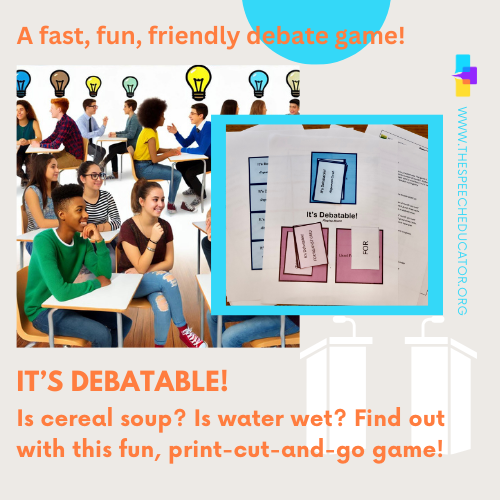
However, when the goal is skill-building, engaging with controversial issues can sometimes derail a lesson from its original purpose. That’s why I’ve created a series of fun, light, and almost silly debate games to teach the essentials of argumentation, rebuttals, refutations, and questioning.
Why Lighthearted Debate Topics Work
The idea behind using topics like “Is cereal a soup?” and “Are muffins cake?” is to keep students passionate and engaged, but in a way that doesn’t touch on the more divisive issues of the day. These topics are relatable and humorous, allowing students to focus on honing their debate skills without the emotional weight that often accompanies more serious subjects.
How the Game Works
- Small Group Debates: Students are divided into small groups to interact with fun, light-hearted debate prompts.
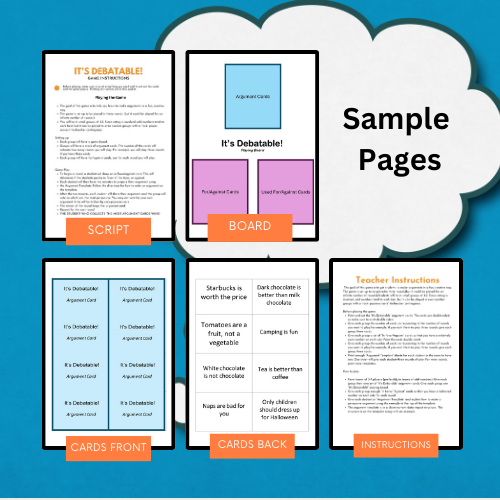
- Structured Arguments: In each round, students create organized arguments using the claim-warrant-data-impact structure. The students use an argumentation template I provide to build sound points. This helps them learn to build solid, evidence-based arguments in a format that’s easy to understand and apply.
- Relatable Prompts: The debate prompts are designed to be relatable and often humorous, so students can draw from their own experiences to support their arguments. This makes the exercise both engaging and accessible.
- Flexible Gameplay: The game is typically played in three rounds over 20-30 minutes, but it can easily be adapted to fit more or less time and to include more or fewer rounds, depending on your classroom needs.
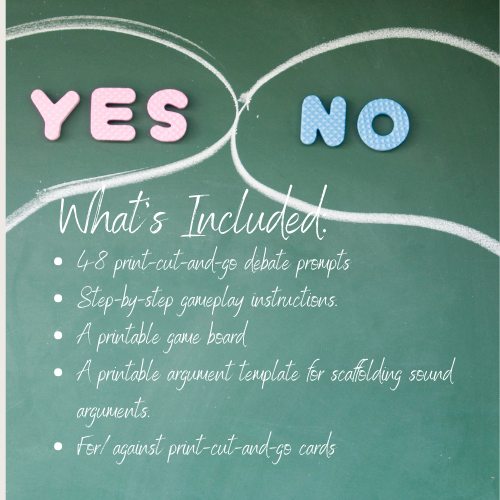
- Ready-to-Use Resources: All the materials for this game are ready to print, cut, and go! This makes it easy to implement in your classroom with minimal preparation.
Conclusion
In a world where divisive issues often dominate the conversation, it’s important to find ways to teach essential skills like debate without getting bogged down in controversy. These lighthearted debate games provide a perfect solution, allowing students to engage, learn, and have fun all at the same time. Whether you’re focusing on building skills or just looking for a fun classroom activity, these games are a great way to bring your students together and help them grow as thinkers and speakers. All the resources are ready for you to use—just print, cut, and go!